The Role of Flame Retardant Masterbatch in Non-Woven Fabrics
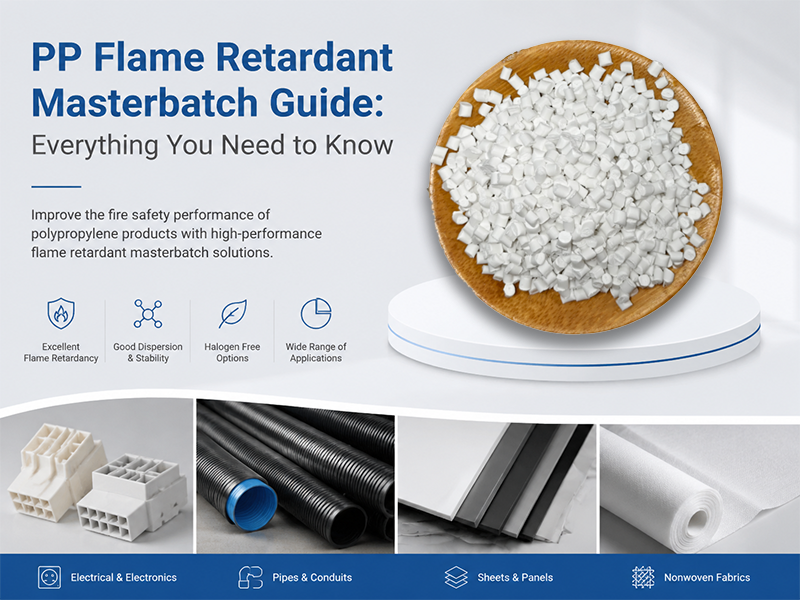
Non-woven fabrics are widely used across industries due to their lightweight structure, versatility, and cost-effectiveness. However, their polymer-based composition often makes them highly flammable, posing risks in applications where safety standards are critical. This is where flame retardant masterbatch becomes essential. By incorporating specialized flame retardant formulations during production, the flammability of non-woven fabrics can be significantly reduced, enabling them to perform reliably under stringent safety requirements. QIBO Technology, established in 2006 and headquartered in Shijiazhuang, has been at the forefront of developing advanced flame retardant solutions that transform ordinary non-woven fabrics into high-performance materials capable of meeting safety and durability standards.

Functional Improvements in Safety and Durability
The incorporation of flame retardant masterbatch into non-woven fabrics not only delays ignition but also helps control flame spread, reducing the release of toxic gases during combustion. This functional upgrade makes non-woven materials suitable for use in applications ranging from automotive interiors and construction insulation to protective clothing and filtration systems. Enhanced thermal stability further ensures that fabrics retain their integrity when exposed to elevated temperatures. For industries where compliance with fire safety regulations is mandatory, flame retardant masterbatch manufacturers provide solutions that extend product lifespans and increase reliability without compromising the inherent benefits of non-woven fabrics such as breathability and flexibility. QIBO Technology leverages its seasoned R&D expertise of over 20 years to create halogen-free and environmentally friendly additives, ensuring a balance between safety performance and ecological responsibility.

Comparing Flame Retardant Fabrics with Conventional Non-Wovens
To fully understand the impact of using flame retardant masterbatch, it is important to compare treated non-woven fabrics with their untreated counterparts. While conventional non-wovens may meet basic functional requirements, their vulnerability to heat and flames limits their usability in high-risk environments. In contrast, fabrics enhanced with flame retardant masterbatch deliver consistent fire resistance, meeting the demands of safety-critical applications.
Feature | Conventional Non-Woven Fabrics | Flame Retardant Non-Woven Fabrics |
Fire Resistance | Low, easily ignitable | High, ignition delayed and flame spread reduced |
Safety Compliance | Limited, often below required standards | Meets stringent safety and regulatory demands |
Durability in High Temperatures | Weak structural stability | Retains integrity under heat exposure |
Application Versatility | Restricted to low-risk environments | Suitable for automotive, construction, textiles, and more |
This comparison highlights the significant role that flame retardant masterbatch plays in elevating non-woven fabrics from general-purpose materials to advanced functional solutions.

Expanding Applications Across Key Industries
The benefits of flame retardant non-woven fabrics extend to multiple industries. In automotive applications, such fabrics are used in seat covers, insulation panels, and headliners, where fire resistance enhances passenger safety. In construction, flame retardant non-wovens contribute to energy-efficient insulation systems while meeting building safety codes. The textile sector integrates these fabrics into protective clothing, uniforms, and industrial gear, ensuring safety in high-risk work environments. Even in aerospace and electronics, flame retardant non-wovens are valued for their lightweight yet resilient nature, helping improve safety without adding unnecessary bulk. QIBO Technology supports these industries by providing tailored OEM services, ensuring that specific requirements for safety, cost efficiency, and environmental compliance are met.

Driving Innovation with Sustainable Solutions
What sets modern flame retardant masterbatch apart is the growing emphasis on sustainability. With increasing global demand for eco-friendly materials, flame retardant masterbatch manufacturers are moving toward halogen-free, low-toxicity solutions that do not compromise performance. By adopting such innovative formulations, non-woven fabrics can maintain fire resistance while supporting environmental objectives. QIBO Technology has made significant progress in this area by offering advanced additives that minimize ecological impact and reduce risks associated with traditional halogen-based systems. The company's dedication to research and development ensures that its solutions evolve in line with global trends, empowering industries to achieve higher levels of safety and environmental responsibility simultaneously.
 English